
Investigating the Neurotoxic Threat Associated with Bacillus pumilus Probiotic Strains
-
Isaac Oluseun Adejumo


Department of Animal Science, University of Ibadan, Ibadan, Nigeria
A.O. AkintayoDepartment of Aquaculture and Fisheries Management, University of Ibadan, Ibadan, Nigeria
Background and Objective: Probiotics offer multiple benefits, including improved gut health, immunity, productivity, and reduced antibiotic resistance, contributing to food security and environmental health. Although Bacillus pumilus has been reported to exhibit both antibiotic and probiotic characteristics, its functional mechanisms remain poorly understood, and its hypothetical proteins are largely unexplored. This study aimed to assess the probiotic potential of Bacillus pumilus strain D5 and to evaluate the physicochemical properties, interleukin-2 (IL-2)-inducing capacity, and safety of its protein-coding hypothetical proteins. Materials and Methods: The genome of Bacillus pumilus strain D5 was analyzed using in silico approaches to predict probiotic traits. Protein-coding hypothetical proteins were characterized for physicochemical properties and IL-2-inducing potential. Computational safety assessments were conducted to identify possible virulence or toxin-related features. Descriptive and comparative analyses were performed to determine the strain’s probiotic potential and the functional relevance of its proteins. The top 25 IL-2-inducing peptides from each protein were analyzed using one-way ANOVA, and mean differences were determined by Duncan’s Multiple Range Test at a 0.05 significance level. Results: The strain exhibited probiotic potential in 59% of evaluated parameters. All peptides derived from the hypothetical proteins demonstrated IL-2-inducing capacity, indicating possible immunomodulatory effects. The proteins showed stability under harsh environmental conditions, supporting their adaptability. However, two proteins were identified as potential bacterial toxins, including one with neurotoxic properties, suggesting possible safety risks. Conclusion: This study provides new insights into the functional roles and safety profile of hypothetical proteins in Bacillus pumilus strain D5. While the strain exhibits promising probiotic characteristics, the identification of toxin-related proteins raises safety concerns that must be addressed before its application as a feed additive or therapeutic agent. Further experimental validation is recommended to ensure safe and sustainable use.
| Copyright © 2026 Adejumo and Akintayo. This is an open-access article distributed under the Creative Commons Attribution License, which permits unrestricted use, distribution, and reproduction in any medium, provided the original work is properly cited. |
INTRODUCTION
Probiotics are gaining popularity in fish, swine and poultry farming owing to their health-promoting benefits, such as improved gut health, growth performance, feed efficiency, productivity, immunity and reduced mortality rate1-3. Probiotics as alternatives to antibiotics also have environmental benefits. It reduces antibiotic resistance and contributes significantly to enhancing food security and combating food insecurity, which is a major problem in some parts of the world, particularly Sub-Saharan Africa.
T cells (CD4þ helper cells) are the primary source of interleukin-2 (IL-2). It is the first cytokine whose encoding gene was cloned and sequenced4. The roles of IL-2 in regulating immune activation keep unfolding. Nevertheless, attention is also focused on using it to defeat harmful responses, not neglecting its dual roles. It may serve as an inhibitor and as a stimulator5. This duality of nature positions it for use in various ways. A deep understanding of IL-2, its receptor and signaling pathways has been suggested for potential applications in structure-based drug design, capable of treating many diseases and for many therapeutic applications, which may eventually pave the way for similar applications of other pleiotropic cytokines5.
Recent studies have reported the antibiotic and probiotic characteristics of Bacillus pumilus1,6, but its functional mechanisms are incompletely understood. Also, its hypothetical proteins remain unexplored, necessitating this study. This study was therefore conducted to assess the probiotic characteristics of Bacillus pumilus strain D5, analyze its physico-chemical properties, investigate the IL-2-inducing capacity of peptides from its protein-coding hypothetical proteins and confirm its safety for sustainable applications as feed additives and therapeutic purposes.
MATERIALS AND METHODS
Study area and duration: This study was conducted between June and August, 2025 at the Department of Animal Science, University of Ibadan, Ibadan, Nigeria.
Bacterium host and sequencing information: The complete whole genome nucleotide sequence (fasta format) of Bacillus pumilus strain D5 (accession: CP069125 and version: CP069125.1) was retrieved from the National Center for Biotechnology Information. The sequencing technology used was Illumina HiSeq; Oxford Nanopore; assembly method was Unicycler v. 0.4.9b, the genome representation was full; genome coverage was 1161.0x and the source was Penaeus vannamei (white shrimp). The genome size and total ungapped length is 3.7 Mb, and GC percent is 42. The genes present in the genome are 3,740 and 3,634 are protein-coding.
Selection of hypothetical proteins: The protein-coding hypothetical proteins (639) were explored, and nine were randomly selected and analyzed. The selected proteins with their characteristics are presented in Table 1.
Probiotic evaluation: The probiotic potential of Bacillus pumilus strain D5 complete genome was evaluated using iprobiotics (http://bioinfor.imu.edu.cn/iprobiotics/public/index.html)7.
Physico-chemical properties analysis: The selected hypothetical proteins were subjected to physicochemical properties analysis (https://web.expasy.org/protparam/)8.
| Table 1: | Selected proteins of Bacillus pumilus strain D5 with their characteristics | |||
| Genomic location | Proteins | Length (aa) | Locus Tag | Gene type | Name | Designation |
| CP069125.1:4187-4432 | XHU98451.1 | 81 | MHHHKEFG_00005 | P-C | HP | A |
| CP069125.1:150561-150764 | XHU98586.1 | 67 | MHHHKEFG_00172 | P-C | HP | B |
| CP069125.1:196536-196727 | XHU98629.1 | 63 | MHHHKEFG_00228 | P-C | HP | C |
| CP069125.1:214492-214677 | XHU98648.1 | 61 | MHHHKEFG_00247 | P-C | HP | D |
| CP069125.1:219557-219733 | XHU98657.1 | 58 | MHHHKEFG_00256 | P-C | HP | E |
| CP069125.1:230978-231178 | XHU98669.1 | 66 | MHHHKEFG_00269 | P-C | HP | F |
| CP069125.1:235895-236080 | XHU98673.1 | 61 | MHHHKEFG_00273 | P-C | HP | G |
| CP069125.1:253312-253482 | XHU98689.1 | 56 | MHHHKEFG_00289 | P-C | HP | H |
| CP069125.1:606948-607127 | XHU98995.1 | 59 | MHHHKEFG_00618 | P-C | HP | I |
| P-C: Protein coding and HP: Hypothetical protein | ||||||
Interleukin-2-inducing potential: Each of the nine protein-coding hypothetical proteins were scanned for regions that induce IL-2 (https://webs.iiitd.edu.in/raghava/il2pred/index.html)9. One hundred peptides of such were produced. Out of the hundreds produced, twenty-five were selected from each of the proteins based on their ML scores. The ones with the highest ML scores per group were selected and organized in a completely randomized manner.
Toxicity evaluation: The selected proteins were subjected to toxicity evaluation for neurotoxin using NTXpred (https://webs.iiitd.edu.in/raghava/ntxpred/)10, bacterial toxin using BTXpred (https://webs.iiitd.edu.in/raghava/btxpred/submission.html)11.
Statistical analysis: The selected top twenty-five IL-2-inducing peptides from each protein were subjected to one-way analysis of variance. Means were separated using Duncan’s Multiple Range Test, and the significance level was established at α = 0.05.
RESULTS
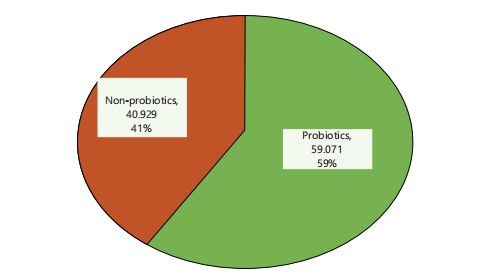
Figure 1 shows the probiotic proportion of Bacillus pumilus. The probiotic analysis of the whole genome of Bacillus pumilus strain D5 chromosome revealed that the genome is about 59% probiotic while the rest indicates non-probiotic portions. It is therefore obvious that B. pumilus is a probiotic bacterium, which may be used as a feed additive for sustainable animal food production, such as chicken, swine and fish farming.
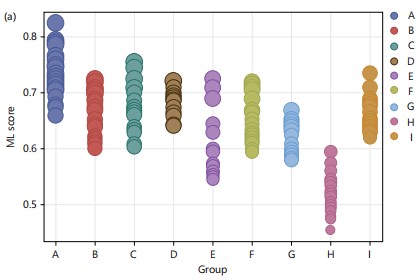
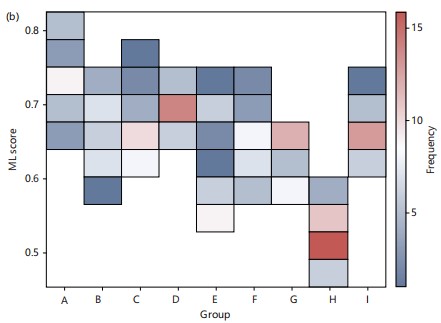
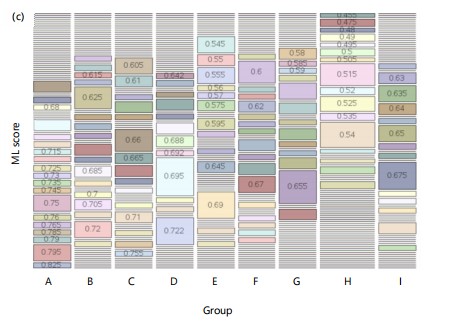
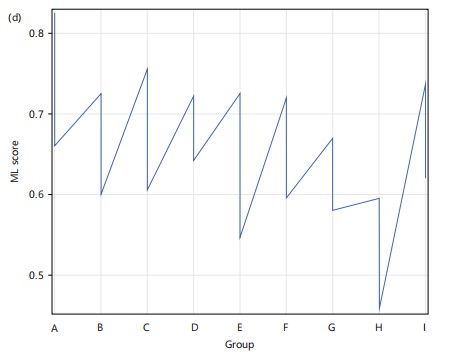
Figure 2a presents a bubble plot showing the variation in ML (machine learning) scores for IL-2- inducing peptides, where larger bubbles denote higher predictive strength. Figure 2b displays a heatmap highlighting the intensity of ML scores across different protein groups, with warmer colors indicating stronger IL-2-induction potential. Figure 2c shows a mosaic plot representing the relative frequency distribution of scores among the nine protein groups (A-I), demonstrating the variability in IL-2-inducing ability. Figure 2d presents a series plot summarizing the ML score trend across the groups, where Group A recorded the highest mean score, followed by Groups B and C, while Group H exhibited the lowest. These visualizations collectively depict that all selected hypothetical proteins possess IL-2-inducing potential, although the magnitude of induction varies significantly among the groups.
Table 2 shows the statistical analysis results of ML scores for IL-2-inducing potential of peptides derived from hypothetical proteins of Bacillus pumilus strain D5 chromosome. All the selected proteins induce IL-2. However, statistical analysis revealed that peptides obtained from Group A had the highest ML score, which is significantly (p<0.05) higher than the values obtained for the peptides from the remaining proteins (Table 2). Peptides from Group B closely followed A, which is significantly (p<0.05) lower than the value obtained for A5 but significantly (p<0.05) higher than peptides from the remaining protein groups. Groups B, C, and I% closely followed B, although significantly (p<0.05) lower than A and B, they are significantly (p<0.05) higher than the scores obtained for the remaining peptides from the other protein groups. E, F, and G are statistically similar, although E is significantly (p<0.05) lower than F; it is statistically similar to G. The least value was obtained from the peptides from Group I, which is significantly (p<0.05) lower than the values obtained for the rest peptides. The group mean value is 0.6478, the highest value was 0.7364 (A), while the lowest value was 0.5240. All the peptides considered have IL-inducing capacity, but Group A had the highest mean value, while Group H had the lowest mean value.
|
|
| Table 2: | Statistical analysis results of ML scores for IL-2-inducing potential of peptides derived from hypothetical proteins of Bacillus pumilus strain D5 chromosome | |||
| Protein group | ML score |
| A | 0.7364a |
| B | 0.6666c |
| C | 0.6636c |
| D | 0.6910b |
| E | 0.6110e |
| F | 0.6470cd |
| G | 0.6280de |
| H | 0.5240f |
| I | 0.6626c |
| a,b,cMeans with different superscripts across the column are significantly (p<0.05) different | |
The physicochemical properties of the selected proteins are presented in Table 3. The estimated half-life for the protein groups is 30 hrs (mammalian reticulocytes, in vitro). >20 hrs (yeast, in vivo). >10 hrs (Escherichia coli, in vivo). Four of the proteins (F, G, H, and I are stable in nature. Aliphatic indices show that the proteins are stable over a wide temperature range. Aliphatic indices ranged between 57.54 and 139.21. The mean value was 100.95. The isoelectric point ranged between 5.00 and 11.00. The mean value was 8.63. The isoelectric point results obtained in this study showed that the proteins can withstand the harsh conditions of the gut. The GRAVY scores are used to determine the hydophilicity and hydrophobicity of proteins. Overall, the values range between -2 and+2. Four of the proteins (B, D, E, and H) obtained a negative GRAVY score, indicating hydrophilicity.
| Table 3: | Physico-chemical properties of selected hypothetical proteins of Bacillus pumilus strain D5 chromosome | |||
| Group | |||||||||
| Parameter | A | B | C | D | E | F | G | H | I |
| #AA | 81 | 67 | 63 | 61 | 58 | 66 | 61 | 56 | 59 |
| pI | 5 | 9.52 | 10.16 | 9.1 | 8.89 | 11 | 6.52 | 7.92 | 9.52 |
| MW | 9117.45 | 7817 | 7175.85 | 7253.23 | 6744.83 | 7781.38 | 7068.62 | 6360.35 | 7067.66 |
| #-ve | 11 | 6 | 4 | 4 | 7 | 1 | 3 | 4 | 3 |
| #+ve | 8 | 10 | 6 | 7 | 10 | 5 | 3 | 5 | 7 |
| Formula | C405H657N101O130S3 | C352H548N98O98S3 | C340H549N83O78S4 | C327H487N95O88S3 | C301H475N83O85S4 | C376H560N90O82S4 | C351H524N70O78S3 | C287H439N77O79S4 | C333H521N81O76S6 |
| EC | 5960* | 15470** | 12490 | 21095** | 8605** | 23490 | 4470* | 1.25E+09 | 15470** |
| 15470*** | 20970*** | 8480*** | 12490*** | 15470*** | |||||
| II | 75.81 | 70.68 | 46.97 | 68.54 | 53.66 | 24.76 | 22.88 | 21.06 | 21.28 |
| AI | 104.44 | 81.49 | 139.21 | 57.54 | 67.24 | 113.64 | 134.1 | 86.96 | 123.9 |
| GRAVY | 0.06 | -0.49 | 0.895 | -1.021 | -0.7 | 0.897 | 1.302 | -0.061 | 0.417 |
| #AA: Number of amino acids, pI: Theoretical isoelectric point, MW: Molecular weight, #-ve: Total number of negatively charged residues (Asp+Glu), #+ve: Total number of positively charged residues (Arg +Lys), EC: Extinction coefficients, II: Instability index, AI: Aliphatic index, GRAVY: Grand average of hydropathicity. Extinction coefficients are in units of M-1 cm-1, at 280 nm measured in water, *This protein does not contain any Trp residues, **assuming all pairs of Cys residues form cystines and ***assuming all Cys residues are reduced | |||||||||
| Table 4: | Toxicity evaluation results of selected hypothetical proteins of the Bacillus pumilus strain D5 chromosome | |||
| Toxicity analysis result | ||
| Protein groups | Neurotoxicity result | Bacterial toxicity result |
| A | Non-toxin | Non-toxin |
| B | Non-toxin | Bacterial toxin: Exotoxin |
| C | Non-toxin | Non-toxin |
| D | Non-toxin | Non-toxin |
| E | Non-toxin | Non-toxin |
| F | Non-toxin | Non-toxin |
| G | Non-toxin | Non-toxin |
| H | Neurotoxin | Bacterial toxin: Exotoxin |
| I | Non-toxin | Non-toxin |
Neurotoxicity evaluation: Table 4 shows the neurotoxic and bacterial toxicity analysis of the selected proteins. The neurotoxicity evaluation revealed that one of the proteins (H) is neurotoxic, while the bacterial toxicity evaluation result indicated the same protein and B as bacterial toxin: exotoxins.
DISCUSSION
Previously classified as Bacillus subtilis, B. pumilus is a gram-positive bacterium found in different habitats112,13. The results of the present study show that the Bacillus pumilus strain D5 chromosome is probiotic. Previous recent studies have also corroborated the finding as reported in the present study. Beyari et al.1 reported that Bacillus pumilus SA388 isolated from the chicken feces was not confirmed probiotic; it also had antibiotic properties. Bacillus pumilus was reported to show significant bactericidal activity against Klebsiella pneumonia, Staphylococcus aureus, Listeria monocytogenes, Salmonella typhi, Escherichia coli, and Streptococcus pyogenes. At 1.6 mg/kg supplementation, B. pumilus SA388 was reported to enhance immunological response, thyroid function, lipid profile, and gut microbiota of broiler chickens. In like manner, B. subtilis P223 had been shown to possess antibiotic and probiotic properties3 it was reported to decrease nitric oxide production, generation of inflammatory cytokine, and reactive oxygen species, in addition to being reported to be effective against the growth of skin infections brought about by Propionibacterium acnes and S. aureus3. The special role of B. pumilus 3-19 in antagonistic activity against soil bacteria has also been documented6. Another recent study had also documented the probiotic and antibiotic potential of Bacillus strains2.
The results of the study showed that four of the proteins (F, G, H, and I are stable in nature. The isoelectric point range between 5.00 and 11.00, showing that the proteins can withstand the harsh conditions of the gut as well as other harsh environmental conditions such as drought and changes in climatic conditions. The estimated half-life for the proteins is 30 hrs, greater than 20 hrs, and greater than 10 hrs in mammalian reticulocytes (in vitro), yeast (in vivo), and Escherichia coli (in vivo), respectively. Aliphatic indices show that the proteins are stable over a wide temperature range. Four of the proteins (B, D, E and H) obtained a negative GRAVY score indicating hydrophilicity, while the rest, which obtained positive values, indicate hydrophobicity. Overall, the values range between -2 and +2. The physicochemical properties of the protein-coding hypothetical proteins of B. pumilus as reported in this study, agree with the previous findings, stating that B. pumilus can withstand extreme environmental stressors14.
Peptides derived from Bacillus pumilus strain D5 in the present study induced IL-2. The immunological potential of Bacillus pumilus has been previously reported1, but the mechanisms remain incompletely explored. Lactic acid bacteria are important probiotic candidates. Previous studies have shown that peptides from hypothetical proteins of Lactobacillus acidophilus induced interleukin 4 (IL-4) and interleukin 10 (IL-10)15. Similarly hypothetical proteins of chicken-isolated Limosilactobacillus reuteri induced IL-2 and IL-1016, and protein-coding hypothetical proteins Ligilactobacillus saerimneri and Ligilactobacillus salivarius were reported to induce interleukin 5 (IL-5) and interleukin-13 (IL-13)17.
IL-2 plays important immunomodulatory roles. Secreted by Th1 cells activated by certain mitogens or interaction of the T-cell receptor with the antigen/MHC complex on the surface of antigen-presenting cells18. IL-2 aids the survival and expansion of activated T cells, synthesis of immunoglobulin and activation of natural killer (NK) cells19. IL-2 gene has been identified in fish20 and has gene has a 4 exon/3 intron organisation like in mammals. The relationship among diets, gene expression and cytokine profile has been reported. This is important in recognizing metabolism-associated pathways and inflammation in pigs. It may also provide significant guide to handling human diseases, that is metabolic diseases21. In pigs, human, mice and chickens, the function of IL-2 in regulating neutrophil has been documented11,12,14. Ctenopharyngodon idellus IL-2 has also been reported to regulate neutrophil antimicrobial activities22.
There is no doubt to the benefits inherent in Bacillus pumilus as feed additive and alternative antibiotics for use in sustainable animal food production such as poultry, swine and fish farming. The search for alternative to sustainable antibiotics is on-going and it is a worthy course aimed at mitigating food insecurity in areas already being plagued or to prevent it from regions that are not yet affected. Antibiotic resistance is a global concern for animal food producers and public health as a whole. Bacillus pumilus looks promising based on findings from similar previous studies, which the findings in the present study agree with. However, there is a major concern as revealed by this study, the threat of neurotoxin potential. If subsequent findings align with the reported neurotoxin potential, then the great potentials Bacillus pumilus holds may have to be left alone for safety concerns. Interestingly, this is the first study reporting this. Other previous studies have only reported the beneficial effects on this strain on animal production, human health and the plant growth, which is commendable, but the safety concern as presently discovered may require concerted efforts to ensure that this strain is safe for consumption, particularly as feed additive for sustainable animal food production.
The importance of neurotoxicity whether pertaining to human health and animal food production cannot be trivialized. Behaviours in vertebrates including fish, are mostly nervously-controlled. Therefore, neurotoxic agents may impair normal behaviour and functions, sometimes for a short period and at certain doses may lead to more permanent damages and neurodegeneration23. Loss of reflex, balance and erratic muscle movement are some of the neurological behavioural alterations, particularly in fish. Behavioural changes owing to toxicants in organisms may impair their appetite and consequently their growth and reproductive performance22. Studies have demonstrated the link between toxicants, performance and behavioural changes in animals24-27. Marine biotoxins are of serious concern to human health, ingestion of these biotoxins or through other routes may result in threatening symptoms, depending on what types one is exposed to, such as digestive symptoms in mammals28.
CONCLUSION
The findings of this study provide novel insights into the functional roles and safety profile of hypothetical proteins derived from Bacillus pumilus strain D5. The strain demonstrated promising probiotic characteristics and strong IL-2-inducing potential, suggesting its possible immunomodulatory benefits. However, the detection of toxin-related proteins, including one with neurotoxic potential, highlights important safety concerns that must be addressed before its practical use as a probiotic or therapeutic agent. Therefore, further experimental validation is strongly recommended to ensure the safe and sustainable application of this strain in animal feed and biotechnological formulations.
SIGNIFICANCE STATEMENT
This study is the first to report both the probiotic potential and neurotoxic risk of Bacillus pumilus strain D5. The identification of IL-2–inducing peptides reveals its immunomodulatory capacity, while the detection of toxin-related proteins underscores the need for caution in its probiotic application. These findings provide critical insights for future safety assessments and responsible utilization of Bacillus strains in animal nutrition and biotechnology.
ACKNOWLEDGMENT
The authors appreciate Olawumi Adejumo’s support.
REFERENCES
- Beyari, E.A., N.M. Alshammari, S.A. Alamoudi, A.S. Mohamed and L.R. Altarjami et al., 2024. Influences of Bacillus pumilus SA388 as an environmentally friendly antibiotic alternative on growth performance, blood biochemistry, immunology, cecal microbiota, and meat quality in broiler chickens. Poult. Sci., 103.
- Golnari, M., N. Bahrami, Z. Milanian, M.R. Khorasgani, M.A. Asadollahi, R. Shafiei and S. Safa-Ali Fatemi, 2024. Isolation and characterization of novel Bacillus strains with superior probiotic potential: Comparative analysis and safety evaluation. Sci. Rep., 14.
- Jung, H.S., H.W. Lee, K.T. Kim, N.K. Lee and H.D. Paik, 2024. Anti-inflammatory, antioxidant effects, and antimicrobial effect of Bacillus subtilis P223. Food Sci. Biotechnol., 33: 2179-2187.
- Taniguchi, T., H. Matsui, T. Fujita, C. Takaoka, N. Kashima, R. Yoshimoto and J. Hamuro, 1983. Structure and expression of a cloned cDNA for human interleukin-2. Nature, 302: 305-310.
- Abbas, A.K., 2020. The surprising story of IL-2: From experimental models to clinical application. Am. J. Pathol., 190: 1776-1781.
- Danilova, I.V., I.A. Vasileva, A.I. Gilmutdinova, I.V. Dyadkina and L.K. Khusnullina et al., 2023. Characterization of Bacillus pumilus strains with targeted gene editing for antimicrobial peptides and sporulation factor. Microorganisms, 11.
- Sun, Y., H. Li, L. Zheng, J. Li and Y. Hong et al., 2022. iProbiotics: A machine learning platform for rapid identification of probiotic properties from whole-genome primary sequences. Briefings Bioinf., 23.
- Gasteiger, E., C. Hoogland, A. Gattiker, S. Duvaud, M.R. Wilkins, R.D. Appel and A. Bairoch, 2005. Protein Identification and Analysis Tools on the ExPASy Server. In: The Proteomics Protocols Handbook, Walker, J.M. (Ed.), Humana Press, New Jersey, USA., ISBN-13: 978-1588295934, pp: 571-607.
- Mehta, N.K., A. Lathwal, R. Kumar, D. Kaur and G.P.S. Raghava, 2025. In silico tool for predicting, designing and scanning IL-2 inducing peptides. Sci. Rep., 15.
- Saha, S. and G.P.S. Raghava, 2007. Prediction of neurotoxins based on their function and source. In silico Biol., 7: 369-387.
- Saha, S. and G.P.S. Raghava, 2007. BTXpred: Prediction of bacterial toxins. In silico Biol., 7: 405-412.
- Pudova, D.S., A.A. Toymentseva, N.E. Gogoleva, E.I. Shagimardanova, A.M. Mardanova and M.R. Sharipova, 2022. Comparative genome analysis of two Bacillus pumilus strains producing high level of extracellular hydrolases. Genes, 13.
- Zhang, Q., Y. Lin, G. Shen, H. Zhang and S. Lyu, 2022. Siderophores of Bacillus pumilus promote 2-keto-L-gulonic acid production in a vitamin C microbial fermentation system. J. Basic Microbiol., 62: 833-842.
- El-Saadony, M.T., A.M. Saad, T. Yang, H.M. Salem and S.A. Korma et al., 2023. Avian campylobacteriosis, prevalence, sources, hazards, antibiotic resistance, poultry meat contamination, and control measures: A comprehensive review. Poult. Sci., 102.
- Adejumo, I.O. and O.A. Adebiyi, 2025. Peptides from hypothetical proteins of Lactobacillus acidophilus induce IL-4 and IL-10. Biomed. Res. Ther., 12: 7191-7206.
- Adejumo, I.O., 2024. Hypothetical proteins of chicken-isolated Limosilactobacillus reuteri subjected to in silico analyses induce IL-2 and IL-10. Genes Nutr., 19.
- Adejumo, I.O., 2025. Immunotherapy potential of animal-sourced probiotic bacteria. Biologics, 5.
- Reyes-Cerpa, S., K. Maisey, F. Reyes-Lpez, D. Toro-Ascuy, A. Mara and M. Imarai, 2012. Fish Cytokines and Immune Response. In: New Advances and Contributions to Fish Biology, Turker, H. (Eds.), IntechOpen, England, ISBN: 978-953-51-7055-6 .
- Yu, T.K., E.G. Caudell, C. Smid and E.A. Grimm, 2014. IL-2 activation of NK cells: Involvement of MKK1/2/ERK but not p38 kinase pathway. J. Immunol., 164: 6244-6251.
- Bird, S., J. Zou, T. Kono, M. Sakai, J.M. Dijkstra and C. Secombes, 2005. Characterisation and expression analysis of interleukin 2 (IL-2) and IL-21 homologues in the Japanese pufferfish, Fugu rubripes, following their discovery by synteny. Immunogenetics, 56: 909-923.
- Ciconello, F.N., C.K. Tuggle, J.D. Gomes, B.P.M. da Silva and M. de Castro Durval et al., 2025. Pig models reveal the interplay between fatty acids and cytokines in skeletal muscle. Sci. Rep., 15.
- Lv, M., Y. Wang, J. Yu, Y. Kong, H. Zhou, A. Zhang and X. Wang, 2024. Grass carp Il-2 promotes neutrophil extracellular traps formation via inducing ROS production and autophagy in vitro. Fish Shellfish Immunol., 144.
- Kar, S. and B. Senthilkumaran, 2024. Recent advances in understanding neurotoxicity, behavior and neurodegeneration in siluriformes. Aquacult. Fish., 9: 404-410.
- Adejumo, I.O., A.D. Ologhobo and O.O. Alabi, 2015. Haematological response and egg production of chickens fed with diets containing insecticide-treated maize. J. Adv. Food Sci. Technol., 2: 24-28.
- Adejumo, I.O. and A.D. Ologhobo, 2015. Effect of insecticide-treated maize on heart and liver histology of laying chickens. J. Biol. Nat., 3: 21-25.
- Adejumo, I.O., A.D. Ologhobo and T.O. Babalola, 2015. Effect of pre-planting seed dressers on serum enzymes of laying chickens. Chem. Sci. Int. J., 9.
- Baldissera, M.D., C.F. Souza, R. Zanella, O.D. Prestes, A.D. Meinhart, A.S. da Silva and B. Baldisserotto, 2021. Behavioral impairment and neurotoxic responses of silver catfish Rhamdia quelen exposed to organophosphate pesticide trichlorfon: Protective effects of diet containing rutin. Comp. Biochem. Physiol. C: Toxicol. Pharmacol., 239.
- Guillotin, S. and N. Delcourt, 2021. Marine neurotoxins’ effects on environmental and human health: An OMICS overview. Mar. Drugs, 20.
How to Cite this paper?
APA-7 Style
Adejumo,
I.O., Akintayo,
A.O. (2026). Investigating the Neurotoxic Threat Associated with Bacillus pumilus Probiotic Strains. Asian Journal of Biological Sciences, 19(1), 12-21. https://doi.org/10.3923/ajbs.2026.12.21
ACS Style
Adejumo,
I.O.; Akintayo,
A.O. Investigating the Neurotoxic Threat Associated with Bacillus pumilus Probiotic Strains. Asian J. Biol. Sci 2026, 19, 12-21. https://doi.org/10.3923/ajbs.2026.12.21
AMA Style
Adejumo
IO, Akintayo
AO. Investigating the Neurotoxic Threat Associated with Bacillus pumilus Probiotic Strains. Asian Journal of Biological Sciences. 2026; 19(1): 12-21. https://doi.org/10.3923/ajbs.2026.12.21
Chicago/Turabian Style
Adejumo, Isaac, Oluseun, and A. O. Akintayo.
2026. "Investigating the Neurotoxic Threat Associated with Bacillus pumilus Probiotic Strains" Asian Journal of Biological Sciences 19, no. 1: 12-21. https://doi.org/10.3923/ajbs.2026.12.21

This work is licensed under a Creative Commons Attribution 4.0 International License.
