
Phytoremediation of Reactive Yellow-176 (RY176) Dye by Lemna Species
-
Halima Sani Mamman
Biological Sciences Department, Bayero University, Kano, Nigeria
Zainab Muhammad Sani

Biological Sciences Department, Bayero University, Kano, Nigeria
| Received 07 Nov, 2025 |
Accepted 13 Jan, 2026 |
Published 31 Mar, 2026 |
Background and Objective: The discharge of industrial wastewater containing reactive dyes poses a significant environmental threat, necessitating sustainable remediation approaches that include the use of plant tissues to remove pollutants. This study explores the potential of Lemna species (duckweed) in the effective phytoremediation of reactive yellow-176 (RY176) dye. Materials and Methods: The study was conducted through inoculation of the fresh life biomass of the plant species (Lemna species) in the dye solution for 14 days. The dye removal efficiency was observed based on initial dye concentration, incubation period, biomass density and chlorophyll content. One-way analysis of variance was used to analyze all the data obtained and readings were considered significant when p<0.05. Results: The results showed an increase in biomass density (ranging from 18.0-28.5 g) due to detoxification and repair mechanisms and a decrease in chlorophyll level (28.6-19.3 µg/g) with increased incubation period, which was due to oxidative stress. A partial dye removal was observed which was within a range of 7.4-61.0%. Dye removal increased within the first 7 days of inoculation and declined in subsequent days due to oxidative stress. Conclusion: The findings of the study revealed that Lemna species has low efficiency in the remediation of RY176. However, it can be a sustainable alternative for wastewater treatment to mitigate environmental pollution when in synergy with other macrophyte species or microorganisms possessing dye-degrading capabilities.
| Copyright © 2026 Mamman and Sani. This is an open-access article distributed under the Creative Commons Attribution License, which permits unrestricted use, distribution, and reproduction in any medium, provided the original work is properly cited. |
INTRODUCTION
The extensive use of synthetic dyes in textile and related industries has led to the discharge of large volumes of coloured effluents into the environment1. This is posing serious ecological and public health challenges1,2. Azo dyes such as reactive yellow-176 (RY176) are known for their high water solubility, structural stability, environmental persistence and resistance to conventional treatment methods (chemical and physical processes). Their complex aromatic structures hinder microbial degradation and can impart toxicity to aquatic life due to their potential to form carcinogenic and mutagenic by-products3.
In response to the disadvantages of traditional physico-chemical treatment strategies that are often expensive and generate secondary pollution, the use of plants to remove, degrade or immobilize pollutants (phytoremediation) has emerged as a promising, eco-friendly and cost-effective alternative.
This technique harnesses the natural ability of certain plants to absorb, degrade or immobilize environmental contaminants4,5. Among aquatic macrophytes, Lemna species (duckweed) have gained considerable attention due to their rapid growth rate, simple structure and adaptability to contaminated environments6.
Lemna species have demonstrated notable potential in mineralising various pollutants (heavy metals, nutrients and organic compounds). their high surface area to volume ratio and efficient nutrient uptake system make them suitable candidates for the neutralization of dye-laden wastewater7. However, studies specifically addressing their interaction with reactive dyes such as RY176 remain relatively limited. Awareness of the phytoremediation dynamics of Lemna species with RY176 dye can contribute valuable insights into sustainable treatment approaches for dye-contaminated water bodies.
This study, therefore, investigates the phytoremediation potential of Lemna species in the removal of RY176 from aqueous media. It aims to evaluate the dye uptake efficiency, biomass response and physiological transformation in Lemna species as it is inoculated in the dye.
MATERIALS AND METHODS
Study area: The study was carried out at the Botanical Garden, Department of Biological Sciences, Bayero University, Kano, Nigeria, from December, 2024 to September, 2025.
Research protocol: Healthy Lemna fronds were collected from an artificially designed freshwater pond situated at the Departmental garden of Biological Sciences, Bayero University, Kano, Nigeria. Ten grams of the fresh biomass of the plants were placed in open, well-aerated and labelled containers8.
Stock solution of reactive yellow-176 was prepared by dispensing 5.0 g of the dye powder into 1 L of distilled water (1000 mg/L) and the experimental solutions were set into five treatment categories based on percentage concentration of dye (10, 25, 50, 75 and 100%)9.
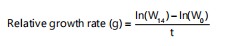
The initially measured Lemna plant biomass was transferred into the labelled containers containing 500 mL of dye solution (separate for each of the concentrations-10, 25, 50, 75 and 100%). A separate container with distilled water and 10 g of the plant biomass served as the control. Fresh weight of Lemna was recorded before and after 1, 7 and 14 days of exposure using the formula8:
 |
Where:
| W14 | = | Initial weight at day 0 (g) | |
| W0 | = | Final weight at day 14 (g) | |
| t | = | Period of exposure (day) |
Dye concentration was measured spectrophotometrically at a maximum absorption wavelength (λmax = 419 nm). Dye percentage removal efficiency (%) was calculated using the formula1:
 |
Where:
| A | = | Initial absorbance of the dye | |
| B | = | Final absorbance of dye by Lemna species |
The chlorophyll content was measured using a SPAD Chlorophyll meter, where pigment concentration was expressed as μg/g fresh weight. The samples were further subjected to FTIR analysis to investigate dye degradation10,11.
Statistical analysis: All experimental trials were conducted in three replicates and the data obtained were expressed as the mean with corresponding standard errors and analysed using the IBM SPSS statistical package (version 26) to determine statistical significance. Readings were considered significant whenp<0.05.
RESULTS
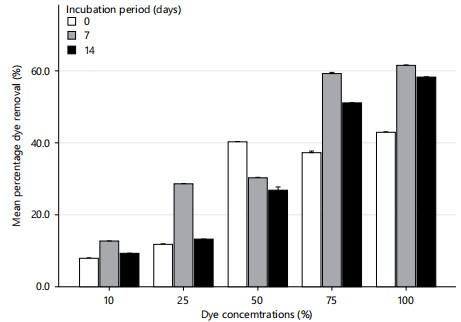
The phytoremediation of RY176 by Lemna species was partially effective, which was observed at varying levels of treatments (Fig. 1). Spectrophotometric analysis revealed that the Lemna species achieved a dye removal efficiency within an approximate range of 13-61% after 7 days, with a significant decline observed in subsequent days (8-14 days) (Fig. 1).
Fresh biomass of the Lemna species increased by 21-23% in dye-treated groups over 14 days, with relative growth rate higher at 25% dye concentration (0.23 g/g/day) (Table 1). The biomass also displayed slight chlorosis but maintained substantial green pigmentation.
Chlorophyll levels were slightly elevated during the first 7 days, possibly indicating an adaptive stress response. However, by day 14, a significant decrease in chlorophyll content was observed compared to the control (Table 2).
| Table 1: | Mean values for Lemna species biomass weight (g) within the 14 days of incubation with RY176 dye | |||
| Days | ||||
| Dye concentration (%) | 1 | 7 | 14 | Relative growth rate (g/g/day) |
| 10 | 10.0±0.00 | 25.9±1.37 | 25.5±1.12 | 0.22 |
| 25 | 10.0±0.00 | 24.4±4.35 | 21.2±0.76 | 0.21 |
| 50 | 10.0±0.00 | 28.5±1.20 | 27.9±1.31 | 0.23 |
| 75 | 10.0±0.00 | 22.0±1.37 | 21.0±0.32 | 0.21 |
| 100 | 10.0±0.00 | 25.7±1.50 | 22.5±0.57 | 0.22 |
| Control | 10.0±0.00 | 18.6±0.47 | 16.2±1.25 | 0.19 |
| The highest and lowest biomass weights were 28.5 g (at 50% dye concentration on day 7) and 21.0 g (at 75% dye concentration on day 14) | ||||
|
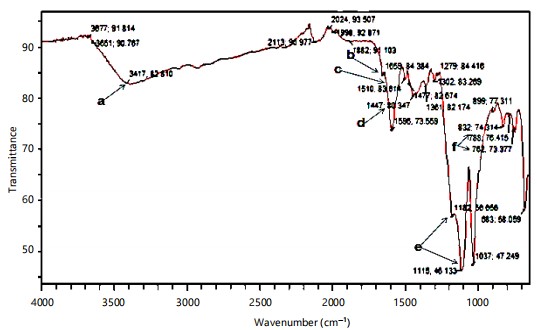
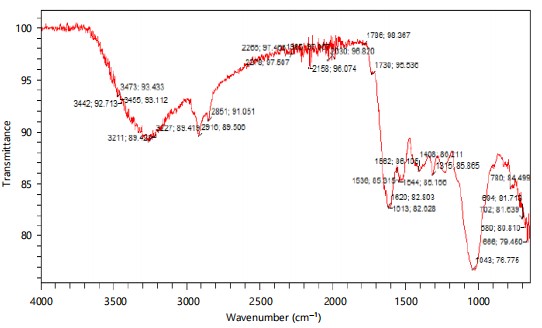
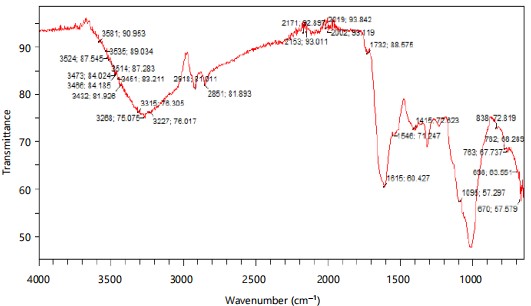
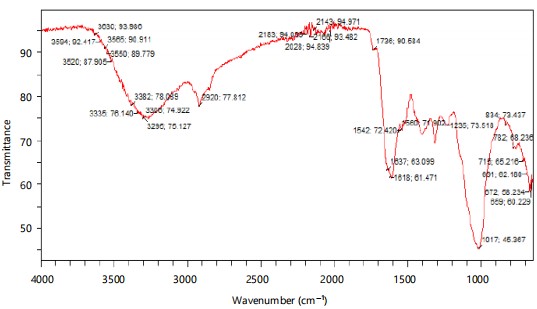
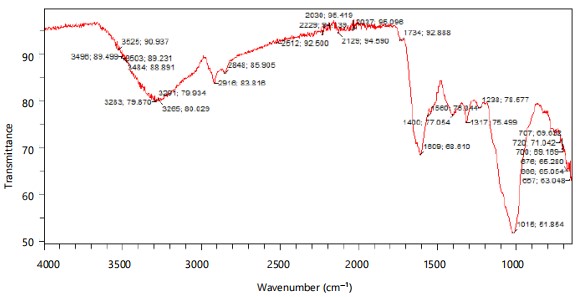
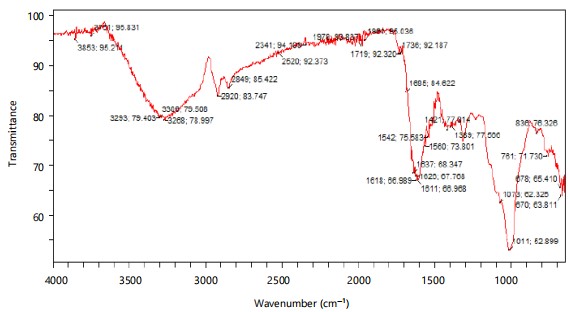
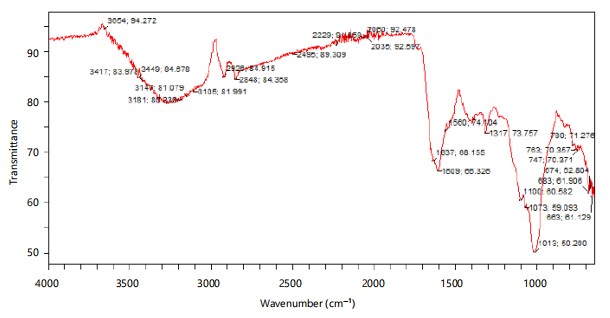
Fourier-Transform Infrared Spectroscopy (FTIR) analysis (Fig. 2-8) revealed distinct chemical transformations in the RY176 dye after 14 days of exposure to Lemna species. The initial dye spectrum (Fig. 2) showed strong peaks characteristic of hydroxyl (-OH), carboxyl (-COOH), azo (-N = N-), nitro (-NO2), sulfonic acid (-SO3H) and chloro (C-Cl) functional groups, indicative of a complex aromatic structure. Post-treatment spectra (Fig. 3-8) demonstrated a notable decrease in intensity or disappearance of peaks associated with the azo (~1600-1500 cm–1) and nitro groups (~1510, 1343 cm–1).
As presented in Fig. 1, the highest dye removal (61.0 %) was observed after 7 days at the 100% treatment and the least (7.4%) at 10% treatment on the first day of inoculation. The results in Fig. 1 shows a significant difference among the five treatment groups, F(4, 40) = 60.82, p<0.001). This indicates that the plant species had a significantly different dye removal for each of the treatments.
|
|
| Table 2: | Mean values for chlorophyll levels (μg/g) of Lemna species within the 14 days of incubation with RY176 dye | |||
| Days | |||
| Dye concentration (%) | 1 | 7 | 14 |
| 10 | 19.4±0.10 | 25.8±0.12 | 25.8±0.10 |
| 25 | 19.5±0.06 | 24.4±0.10 | 21.2±0.06 |
| 50 | 19.4±0.12 | 28.6±0.12 | 27.7±0.20 |
| 75 | 19.5±0.00 | 22.5±0.10 | 22.9±0.06 |
| 100 | 19.5±0.10 | 25.7±0.15 | 22.5±0.10 |
| Control | 19.5±0.06 | 22.8±0.06 | 19.3±0.20 |
| The highest and least chlorophyll levels were 28.6 μg/g (at 50% dye concentration on day 7) and 21.2 μg/g (at 25% dye concentration on day 14) | |||
|
|
|
|
DISCUSSION
The results of the study revealed a partial and varying dye removal efficiency by Lemna species when exposed to the five dye concentrations (10, 25, 50, 75 and 100%). This indicated that the plant species has low potential in the dye removal. This agrees with the findings of Ramirez-Castillo et al.11 who used Lemna species in the remediation of methylene blue (which was removed completely) and Congo red (partially removed)10,11.
The biomass also displayed slight chlorosis but maintained substantial green pigmentation. The increase in biomass may be due to certain factors that include: hormetic effect (mild stress stimulation), which stimulates growth at low concentrations, faster cell division, increased metabolic activity, temporary boost in nutrient uptake efficiency10. Zhou et al.12 reported that the dye or it breakdown products may contain nitrogen, sulfur or other elements that can act as additional nutrient sources, thus influencing biomass growth. Another factor that may influence biomass bloom is light filtration effects, which is associated with the ability of the plant species to trap excessive light that might reduce photoinhibition and help in biomass accumulation11,12. Prolonged exposure to the dye can alter the osmotic properties of the water, leading plants to retain more water in their tissues, thus artificially increasing fresh weight. The biomass of Lemna can increase when exposed to synthetic dyes because of mild stress stimulation, nutrient uptake from dye breakdown, improved light conditions or water retention, but only at low concentration and short-term exposure10-13.
|
The temporary increase in chlorophyll levels within the first 7 days of exposure may be due to hormetic response (slight stress that can stimulate protective mechanisms) including upregulation of chlorophyll synthesis to maintain photosynthesis (at low dye concentration)12. Often the dye blocks some wavelength of light, as such the plant species attempts to compensate for the stress by producing more chlorophyll to maximize light capture14. The initial elevation of chlorophyll may also be due to slow dye degradation or precipitation, allowing the plant to maintain or slightly boost chlorophyll level before toxicity builds up12,13. Additionally, short-term exposure at low or moderate dye levels may allow a small increase in chlorophyll due to an adaptive or compensatory response, but long-term exposure usually leads to chlorophyll degradation15. The initial stimulation of chlorophyll and biomass suggests that the species could tolerate moderate dye concentrations before phytotoxic effects become dominant15,16.
The notable decrease in intensity or disappearance of peaks associated with the azo and nitro groups suggested partial cleavage in the chromophoric azo linkage and reduction processes facilitated by the Lemna species14. Simultaneously, a shift and broadening in the hydroxyl region and reduced aromatic peak intensity implied partial ring opening and increased solubilisation. However, persistent signals in the sulfonic and chloro regions highlight the recalcitrant nature of these moieties16. Overall, the Lemna sp. demonstrated an effective partial phytodegradation of the RY176 dye, particularly targeting its chromophoric structures. Complete mineralization may require extended treatment or microbial assistance10,15,17.
This study focused on a single plant species phytoremediating a single dye type, which restricts how widely the findings can be generalised. The experiment was conducted under controlled laboratory conditions, making it less representative of the real industrial wastewater environments. Short experimental duration, lack of metabolite identification and the absence of microbial interaction analysis also limit the understanding of long-term degradation processes and the roles of other biological factors. Additionally, the toxicity of the plant biomass after the dye uptake was not determined.
In accordance with the aforementioned limitations, future research should be designed to evaluate multiple aquatic plant species with the potential to remediate a wider range of dye classes using real or mixed wastewater to enhance applicability. Long-term and pilot-scale studies are recommended to gain insight into sustainability and field performance. Furthermore, advanced analytical methods such as LC-MS or GC-MS should be employed to identify degradation by-products and confirm detoxification. Investigating plant-microbe interactions, optimising environmental conditions and assessing safe biomass disposal or valorization will further strengthen the practical relevance of using Lemna species for dye phytoremediation.
CONCLUSION
This study demonstrated that Lemna species is a partially effective agent for the phytoremediation of reactive yellow-176 dye from aqueous solutions. This is because the species was able to remove a small amount of the dye, though it maintained its physiological integrity over the 14-day incubation. The FTIR analysis confirmed a slight chemical degradation of the dye. Moreover, the Lemna species may offer a promising, sustainable and low-cost option for the bioremediation of dyes if the enzymatic pathways responsible for dye degradation by these species is to be further determined along side possibilities of synergy with other species or microorganisms.
SIGNIFICANCE STATEMENT
This study discovered the phytoremediation potential and physiological response of Lemna species in treating wastewater contaminated with reactive yellow-176 dye, which can be beneficial for developing sustainable and eco-friendly remediation strategies. The findings highlight how biomass accumulation and chlorophyll degradation reflect the plant’s detoxification capacity and stress tolerance, providing insights into its functional limits during dye exposure. Understanding these responses is valuable for optimizing macrophyte-based treatment systems and integrating them with other biological agents for improved pollutant removal. This study will help researchers uncover the critical areas of plant-dye interaction dynamics that many researchers were not able to explore. Thus, a new theory on macrophyte-assisted dye degradation mechanisms may be arrived at.
ACKNOWLEDGMENT
The authors acknowledge the assistance and dedication of laboratory technologists of the Departments of Biological Sciences, Plant Science and Biotechnology and Directorate of Research, Innovation and Partnership, Bayero University, Kano, Nigeria.
REFERENCES
- Sani, Z.M., I. Bala, Y.Y. Muhammad, K.M. Umar, N. Abdullahi and S. Ibrahim, 2025. Bioremediation of reactive dyes by fungal species. J. Environ. Biorem. Toxicol., 8: 1-5.
- Sani, Z.M., 2025. Algal-based remediation of synthetic dyes: A mini review. Asian Sci. Bull., 3: 72-81.
- Shen, Y., S. Han, Q. Xu, Y. Wang, Z. Xu, B. Zhao and R. Zhang, 2016. Optimizing degradation of Reactive Yellow 176 by dielectric barrier discharge plasma combined with TiO2 nano-particles prepared using response surface methodology. J. Taiwan Inst. Chem. Eng., 60: 302-312.
- Tahir, U., A. Yasmin and U.H. Khan, 2015. Phytoremediation: Potential flora for synthetic dyestuff metabolism. J. King Saud Univ. Sci., 28: 119-130.
- Amalina, F., A.S.A. Razak, S. Krishnan, A.W. Zularisam, M. Nasrullah, 2022. Water hyacinth (Eichhornia crassipes) for organic contaminants removal in water-A review. J. Hazard. Mater. Adv., 7.
- Bharathiraja, B., J. Jayamuthunagai, R. Praveenkumar and J. Iyyappan, 2017. Phytoremediation Techniques for the Removal of Dye in Wastewater. In: Bioremediation: Applications for Environmental Protection and Management, Varjani, S.J., A.K. Agarwal, E. Gnansounou and B. Gurunathan (Eds.), Springer, Singapore, ISBN: 978-981-10-7485-1, pp: 243-252.
- Liu, Y., H. Xu, C. Yu and G. Zhou, 2021. Multifaceted roles of duckweed in aquatic phytoremediation and bioproducts synthesis. GCB Bioenergy, 13: 70-82.
- Imron, M.F., S.B. Kurniawan, A. Soegianto and F.E. Wahyudianto, 2019. Phytoremediation of methylene blue using duckweed (Lemna minor). Heliyon, 5.
- Mishra, J., A. Saraf and V. Roy, 2022. Textile dyes degradation and purification potential analysis of water hyacinth Eicchornia crassipes. J. Pharm. Negat. Results, 13: 11099-11110.
- Wibowo, Y.G., M.T. Syahnur, P.S. Al-Azizah, D.A. Gintha, B.R.G. Lululangi and Sudibyo, 2023. Phytoremediation of high concentration of ionic dyes using aquatic plant (Lemna minor): A potential eco-friendly solution for wastewater treatment. Environ. Nanotechnol. Monit. Manage., 20.
- Ramírez-Castillo, F.Y., D.E. Guillén-Padilla, C.I. Méndez-Sandate, A.L. Guerrero-Barrera and F.J. Avelar-González 2024. Phytoremediation of methylene blue and congo red by duckweed (Lemna minor). DYNA, 91: 9-15.
- Zhou, Y., A. Stepanenko, O. Kishchenko, J. Xu and N. Borisjuk, 2023. Duckweeds for phytoremediation of polluted water. Plants, 12.
- Khataee, A.R., A. Movafeghi, S. Torbati, S.S. Lisar and M. Zarei, 2012. Phytoremediation potential of duckweed (Lemna minor L.) in degradation of CI acid blue 92: Artificial neural network modeling. Ecotoxicol. Environ. Safety, 80: 291-298.
- Kaur, L. and N. Kanwar, 2022. Duckweed: A model for phytoremediation technology. Holist. Approach Environ., 12: 39-58.
- Singh, H., S. Raj, D. Kumar, S. Sharma and U. Bhatt et al., 2021. Tolerance and decolorization potential of duckweed (Lemna gibba) to C.I. basic green 4. Sci. Rep., 11.
- Al-Zurfi, S.K.L., N.A. Albdairi and S.A. Almadany, 2020. Phytoremediation of Congo red and brilliant green using Lemna minor. Plant Cell Biotechnol. Mol. Biol., 21: 1-10.
- Jeffrey, K.B., A.L.T. Zheng, T.T. Hii, K.W.K. Seng, E.L.T. Chung, J. Lease and Y. Andou, 2025. Sustainable dye wastewater treatment: Utilizing duckweed-derived adsorbents for efficient methylene blue removal. Biomass Convers. Biorefin., 15: 19157-19173.
How to Cite this paper?
APA-7 Style
Mamman,
H.S., Sani,
Z.M. (2026). Phytoremediation of Reactive Yellow-176 (RY176) Dye by Lemna Species. Asian Journal of Biological Sciences, 19(1), 31-39. https://doi.org/10.3923/ajbs.2026.31.39
ACS Style
Mamman,
H.S.; Sani,
Z.M. Phytoremediation of Reactive Yellow-176 (RY176) Dye by Lemna Species. Asian J. Biol. Sci 2026, 19, 31-39. https://doi.org/10.3923/ajbs.2026.31.39
AMA Style
Mamman
HS, Sani
ZM. Phytoremediation of Reactive Yellow-176 (RY176) Dye by Lemna Species. Asian Journal of Biological Sciences. 2026; 19(1): 31-39. https://doi.org/10.3923/ajbs.2026.31.39
Chicago/Turabian Style
Mamman, Halima, Sani, and Zainab Muhammad Sani.
2026. "Phytoremediation of Reactive Yellow-176 (RY176) Dye by Lemna Species" Asian Journal of Biological Sciences 19, no. 1: 31-39. https://doi.org/10.3923/ajbs.2026.31.39

This work is licensed under a Creative Commons Attribution 4.0 International License.
