
Detection and Morphological Assessment of Parasitic Helminths in Sarpa salpa and Euthynnus alletteratus from the Misurata Local Market
-
Fatma M. Abushiba
Department of Zoology, College of Science, Misurata University, Misrata, Libya
Kholoud A. EmshiheetDepartment of Zoology, College of Science, Misurata University, Misrata, Libya
Layla O. Elmajdoub

Department of Zoology, College of Science, Misurata University, Misrata, Libya
Khdija S.M. AliDepartment of Zoology, College of Science, Al-Jufra University, Libya
Sara E. ElzwawyDepartment of Zoology, College of Science, Misurata University, Misrata, Libya
Mabrooka M. AbushalahaDepartment of Zoology, College of Science, Misurata University, Misrata, Libya
Rowida S. AlagmeDepartment of Biology, Science School, Libyan Academic in Misurata, Libya
Huda A. HmanDepartment of Zoology, College of Science, Misurata University, Misrata, Libya
Huda H. ElgeraniDepartment of Zoology, College of Science, Misurata University, Misrata, Libya
Marwa Ali Alsideeg AgeelaDepartment of Zoology, College of Science, Misurata University, Misrata, Libya
Fatima F. EshtiwiDepartment of Zoology, College of Science, Misurata University, Misrata, Libya
Awos A. Ben-SalahDepartment of Zoology, College of Science, Misurata University, Misrata, Libya
Mohammed A. DhanaDepartment of Zoology, College of Science, Misurata University, Misrata, Libya
| Received 19 Dec, 2025 |
Accepted 27 Mar, 2026 |
Published 31 Mar, 2026 |
Background and Objective: Parasitic helminths pose a significant threat to marine fish populations by increasing mortality, reducing productivity, and impairing growth; however, information on how feeding habits influence infection patterns remains limited in the Misurata Region. This study aimed to assess the prevalence, distribution, and pathological impact of helminth parasites in two marine fish species with contrasting diets: the carnivorous Euthynnus alletteratus and the herbivorous Sarpa salpa. Materials and Methods: A total of 140 fish specimens (70 per species) were randomly collected from the Misurata local fish market. The digestive tract and gills were examined for helminth parasites using standard parasitological and histopathological techniques. Parasites were identified morphologically, and infection prevalence, site specificity, and tissue damage were recorded. Differences in infection rates between species were statistically evaluated to determine the influence of feeding habits on parasitic burden. Data analysis was performed using SPSS version 26, applying independent two-tailed t-tests at α = 0.05. Results: Overall, 71.4% of the examined fish were infected with helminth parasites. Euthynnus alletteratus exhibited a significantly higher infection rate (70%) compared to Sarpa salpa (30%). Combined infections of the gastrointestinal tract and gills were more frequent in E. alletteratus, whereas single-site infections predominated in S. salpa. Severe histopathological alterations, particularly in the digestive tract, were more pronounced in E. alletteratus. The study documented a diverse helminth fauna, including the first regional record of Acanthocephala and a digenean species in E. alletteratus, as well as nematode larvae in S. salpa. Conclusion: The findings demonstrate that helminth infection prevalence, distribution, and severity are strongly influenced by host feeding behavior. This study provides the first baseline data on helminth parasitism in these marine fish species from the Misurata area. Future research should expand seasonal sampling and incorporate molecular identification to better understand parasite transmission dynamics and ecological impacts.
| Copyright © 2026 Abushiba et al. This is an open-access article distributed under the Creative Commons Attribution License, which permits unrestricted use, distribution, and reproduction in any medium, provided the original work is properly cited. |
INTRODUCTION
Parasitic helminths are among the most economically significant parasites affecting fish globally. They infect freshwater, marine, and brackish-water fish species, often causing severe harm to their hosts. Marine fish, in particular, serve as common hosts for diverse digenetic parasites found worldwide. These parasites use fish as intermediate or temporary hosts, infesting all organs, with predatory fish typically harboring heavier infections. Their pathogenic effects vary; some invade the gastrointestinal tract of marine fish, stunting growth and triggering diseases that can be fatal, while others have minimal impact1,2.
Research from various global regions indicates that parasitic groups such as Monogeneans, Digenean Trematodes, Nematodes, and Cestodes frequently infect marine fishes. Monogeneans primarily infest the gills, skin, and fins of fish. Digenean trematodes exhibit a complex life cycle involving multiple hosts, with fish acting as either primary or intermediate hosts depending on the species. These trematodes can inhabit external surfaces or internal organs, though most species have limited pathogenic effects on their hosts. Nematodes, on the other hand, can invade any organ, often impairing the function of infected tissues. Cestodes typically target the digestive tract, muscles, or other internal organs, with their larval forms (Plerocercoids) ranking among the most harmful fish parasites globally3.
The Mediterranean Sea has been a focal point for studies on helminth parasites in sparid fish, with extensive contributions from numerous parasitologists over several decades4,5. While Gargouri Ben Abdallah et al.6 have documented various helminth species in the region, research remains notably scarce along Libyan coastal waters, with Elmajdoub et al.7 representing one of the few exceptions.
Despite environmental changes that have diminished parasitic infections, Mediterranean marine ecosystems continue to support diverse parasite communities and remain susceptible to various parasitic diseases. This persistence is particularly concerning given the absence of comprehensive studies on helminth infections in Libyan coastal fish species-a significant knowledge gap considering the ecological and economic importance of these marine resources. Understanding helminth diversity and infection patterns is essential for advancing fish health management and sustainable aquaculture practices.
Among the region’s ecologically important species, Sarpa salpa (Sparidae) stands out for its diversity along the Libyan Coast8. Known locally as “Shalba” in Libya and Tunisia9, this species shares its habitat with Euthynnus alletteratus (Scombridae), an opportunistic carnivore commonly called little tunny or bluefin tuna10,11.
Parasitic infections in marine fish, including Sarpa salpa and Euthynnus alletteratus, have been extensively studied worldwide. For instance, Antar and Gargouri investigated these infections in the Bay of Bizerte, Tunisia12, while Mele et al.13 documented parasitic infestations in E. alletteratus from the southeastern Iberian coast (western Mediterranean), reporting infections by two monogeneans, four didymozoid trematodes, and four copepods. Similarly, Abdel-Gaber et al.14 identified four trematode species (order Plagiorchiida, three families) in E. alletteratus sampled off the Abu Qir landing site, Egypt. Variations in infection rates among these studies likely reflect ecological differences across sampling sites, as environmental conditions strongly influence parasite prevalence15.
Against this backdrop, the present study aimed to assess the prevalence of helminth infections and morphologically characterize helminth species infecting Sarpa salpa and Euthynnus alletteratus obtained from local fish markets in Misurata, Libya.
MATERIALS AND METHODS
Study area: Misurata is a coastal city located in Northwestern Libya along the Mediterranean Sea, approximately 200 km East of Tripoli and 257 km West of Sirte. The region experiences a typical Mediterranean climate, characterized by hot, dry summers and mild, wet winters, with an annual mean temperature of approximately 20°C.
Sample collection: A total of 140 fish specimens were randomly collected from March to September 2023 at the Qasr Ahmed local fish market in Misurata, Libya. The samples consisted of 70 individuals from each species, Euthynnus alletteratus and Sarpa salpa. Immediately after collection, the specimens were placed in insulated containers with ice and transported to the research unit at the Faculty of Science, Misurata University, for further processing.
Species identification and biometric assessment: Initial identification of fish species was conducted based on standard morphological characteristics. Taxonomic confirmation was provided by Dr. Sara Ali Elmabrouk, a Marine Biology specialist at Omar El-Mukhtar University. Each specimen underwent biometric assessment, including measurement of total length (to the nearest 0.1 cm), recording of body weight (to the nearest 0.1 g), and external examination for visible parasitic infections16.
Parasitological examination: Fish were dissected following standard parasitological procedures. The gastrointestinal tract and gill arches were systematically examined for helminth parasites. Infected tissues were isolated and preserved in 90% ethanol, and organs were separated into sterile Petri dishes. Gentle scraping was performed using distilled water for fragile specimens and 0.9% saline solution to preserve parasite structure. Microscopic examination was conducted at magnifications ranging from 40× to 400×.
Parasite processing and identification: Recovered parasites were collected using sterile plastic pipettes and fixed in 70% ethanol in pre-labeled glass vials. Specimens were stained with Acetic Acid Alum Carmine17, dehydrated through a graded ethanol series (70, 80, 90, and 100%), cleared in xylol, and mounted on glass slides using DPX mounting medium for morphological identification.
Statistical analysis: Data analysis was performed using SPSS version 26 (IBM Corp.). Independent two-tailed t-tests were applied at a significance level of α = 0.05 to compare infection prevalence between species, differences in infection intensity, and relationships between host size and parasite load.
Ethical approval statement: This study was conducted following the Declaration of Helsinki and received formal ethical approval from the Research Ethics Committee at the Faculty of Science, Misurata University. Data collection adhered to the guidelines established by the committee.
RESULTS AND DISCUSSION
This study analyzed 140 bonefish purchased from a local market in the Qasr Ahmed area. The sample included two species: Euthynnus alletteratus (weighing between 840 and 1320 grams) and Sarpa salpa (weighing between 235 and 350 g). The researchers discovered that while a fish’s weight did not predict its likelihood of being infected by parasites, heavier fish tended to have more severe infections. Overall, 71.4% of the sampled fi sh were infected with parasitic helminths in their digestive tracts or gills. Infection was more common in Euthynnus alletteratus (70%) than in Sarpa salpa (30%). This infection rate is lower than that reported in a previous study conducted in the Tokra area; this discrepancy may be due to the smaller sample size in the current study. Infections were significantly more prevalent in the digestive tract, with 100% of the infected fish showing signs of infection in this area, compared to 70% in the gills. Statistical analysis confirmed a significant difference in infection rates for Euthynnus alletteratus (p = 0.002), while no significant difference was found for Sarpa salpa (p>0.05) (Table 1).
| Table 1: | Prevalence rates of helminth infections in Sarpa salpa and Euthynnus alletteratus | |||
| Euthynnus alletteratus | Sarpa salpa | ||||||
| Study fish type | Gill | Gut | Total | Gill | Gut | Total | Total |
| Number of infected fish | 10 | 30 | 30 | 60 | 70 | 70 | 100 |
| Prevalence | 10% | 30% | 30% | 60% | 70% | 70% | 71.40% |
| Table 2: | Prevalence rates of common and independent infections in Sarpa salpa and Euthynnus alletteratus | |||
| Euthynnus alletteratus | Sarpa salpa | |||
| Study fish type | Joint infection | Independent infection | Joint infection | Independent infection |
| Number of infected fish | 1 | 2 | 6 | 1 |
| Prevalence | 33.30% | 66.70% | 90% | 10% |
| Table 3: | Intensity of helminth infections in Sarpa salpa and Euthynnus alletteratus | |||
| Euthynnus alletteratus | Sarpa salpa | ||||||
| Study fish type | Gill | Gut | Total | Gill | Gut | Total | Severity of the total |
| Intensity No. | 15 | 35 | 50 | 40 | 1218 | 1258 | 1308 |
| Prevalence | 30% | 70% | 3.82% | 3.17% | 96.80% | 96.20% | |
Analysis of infection patterns showed that co-infection of both the digestive tract and gills was the most common occurrence, found in 70% of parasitized fish. The remaining 30% exhibited an independent infection confined solely to the digestive tract. There was a notable variation between species. Euthynnus alletteratus had a significantly higher rate of combined infections, at 90%, compared to Sarpa salpa, which had a rate of only 33.3%. Conversely, Sarpa salpa displayed a higher prevalence of independent infections (66.7%) compared to E. alletteratus, which had only 10%. Remarkably, all but one E. alletteratus had a combined infection, while all but one S. salpa had an infection confined to the digestive tract. Despite these descriptive trends, statistical analysis indicated that the differences between the rates of independent and combined infections within each species were not significant (p>0.05). The tendency for carnivorous fish like E. alletteratus to host combined infections is likely influenced by their dietary exposure to parasites (Table 2).
The total number of parasites, indicated by infection intensity, varied significantly between the two species studied. Researchers isolated a total of 1,308 helminths. The vast majority, 1,258, were found in Euthynnus alletteratus, while only 50 were found in Sarpa salpa. Additionally, most of the parasites (1,253) were located in the digestive tract, compared to just 55 in the gills. Despite this significant numerical difference, statistical analysis revealed that the variation in infection intensity between the two species was not statistically significant (p>0.05) (Table 3).
In this study, the parasitological examinations revealed various infections caused by different parasitic helminths. Isolated types of helminths were found in the digestive tracts and gills of both Sarpa salpa and Euthynnus alletteratus, classified at the class or order level. The study identified helminths from the Phylum Platyhelminths, specifically Class Trematoda, including Monogenea and the bi-subclass Digenea, in both fish species. Additionally, helminths from the phylum Acanthocephala were also isolated.
The morphological and morphometric analysis of various helminth species collected from Euthynnus alletteratus indicated that Monogenea were the most prevalent parasites, accounting for 66.7%, followed by Digenea at 33.3%, both collected from the gills. Additionally, Digenea collected from the digestive tract represented 66.7% of the total infections in Euthynnus alletteratus.
Monogenea, found in the gills, are hermaphroditic helminths with simple life cycles. Most of these parasites inhabit the external parts of marine fish, with a few residing in the digestive tract. They primarily feed on the mucous membranes of the gills and can be pathogenic, often leading to secondary infections18.
|
|
|
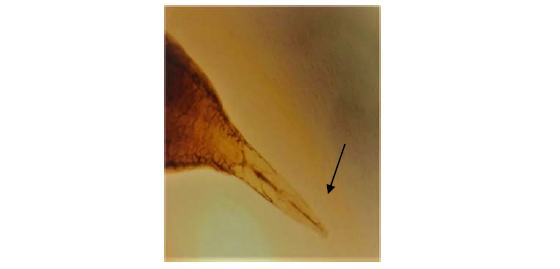
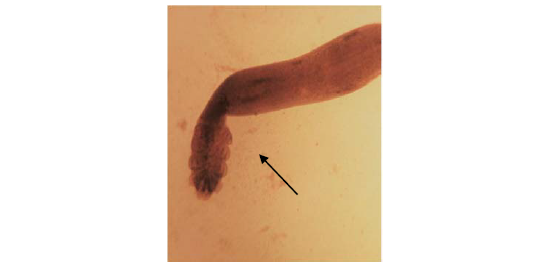
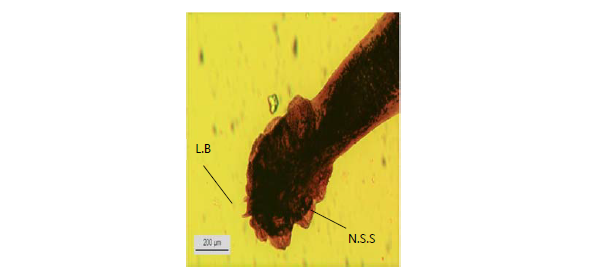
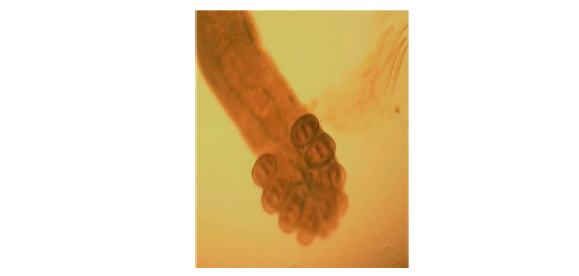
The morphological characteristics of the Monogenea in this study revealed a strong posterior sucker with numerous small suckers equipped with fine spines, classifying them under the order Polyopisthocotylea19 as illustrated in Fig. 1-4.
|
|
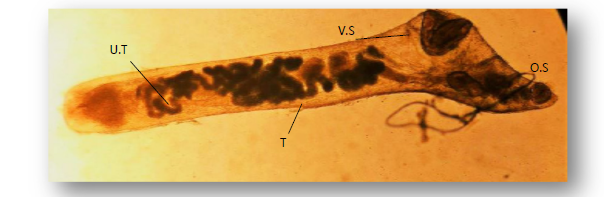
Regarding the Digenea collected from the gills and digestive tract, these helminths are hermaphroditic with complex life cycles. Most are parasitic in the internal organs of marine fish, while some infect the gills. They feed on the connective tissues of the gills and can be pathogenic to fish18. The morphological features of this digenean include a small oral sucker, a larger ventral sucker, and spherical testicles located above the egg-filled uterus, classifying them under the order19 Azygiida as shown in Fig. 5.
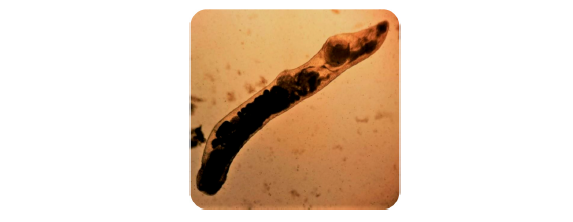
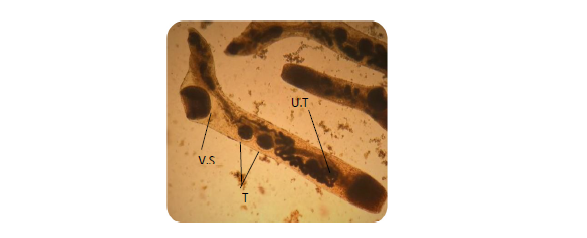
The Digenea collected from the digestive tract feed on the mucous membranes lining the stomach and intestinal tract and are often pathogenic to fish18. Morphologically, this digenean is characterized by two suckers: The oral sucker surrounding the mouth opening and a larger abdominal sucker located in the middle of the body. Additionally, there is a pair of alternating testicles situated above the uterus. These helminths belong to the order Azygiida19, as illustrated in Fig. 6-7.
On the other hand, the results of our study revealed that no cestode infections were detected in the examined fish. However, Acanthocephala infections were present, accounting for 33.3% of the total helminth infections observed. Based on the morphological and morphometric characteristics of the helminths recovered from the digestive tract of Euthynnus alletteratus, the parasites were identified as belonging to the phylum Acanthocephala. This group is distinguished by the presence of tentacles armed with fine spines, a complex life cycle, and their propensity to infect the digestive systems of their hosts. These helminths possess a long, double-walled proboscis covered with molecular spines, and their outer cuticle is lined with sharp spines that facilitate attachment to host tissues. According to Bursey et al.20, these features classify them within the order Palaeacanthocephala, as illustrated in Fig. 8-9.
|
|

|
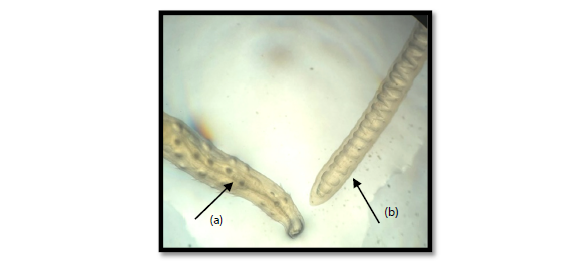
Based on the morphological and morphometric characteristics of helminths collected from various regions of Sarpa salpa, the most prevalent parasites were digeneans, accounting for 70% of the infections, and were primarily isolated from the digestive tract. In contrast, monogeneans were collected from the gills. Morphological examination of these helminths revealed the presence of a prominent posterior attachment organ consisting of a single robust sucker equipped with strong hooks or claws. These defining features are characteristic of worms belonging to the order Monopisthocotylea, as described21-23, and are illustrated in Fig. 10.
|
|
|
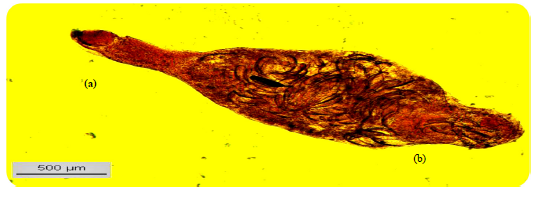
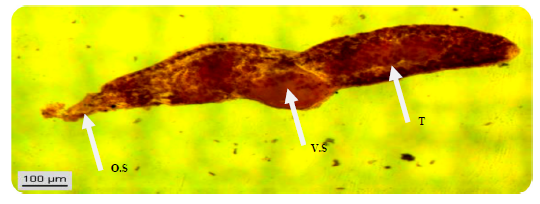
In this study, the digenean parasite isolated from the digestive tract exhibited distinct morphological features. The anterior end of the worm is tapered and bears a small oral sucker, while a larger ventral sucker is located mid-body. A follicular sac is positioned above the ventral sucker, and the testes are spherical and situated at the posterior end of the body. Based on these characteristics, the parasite is classified within the order Plagiorchiida24, as illustrated in Fig. 11.
|
|
|
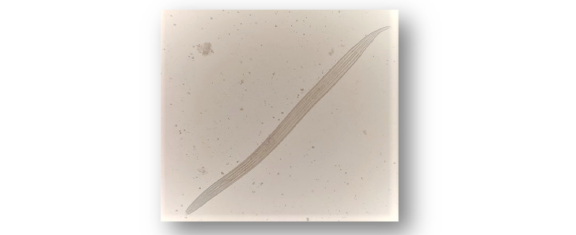
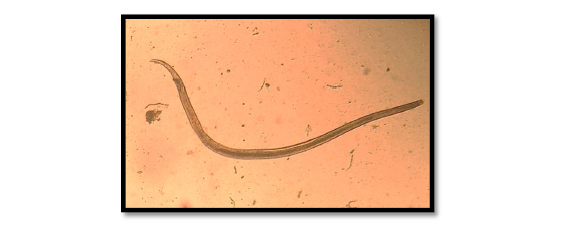
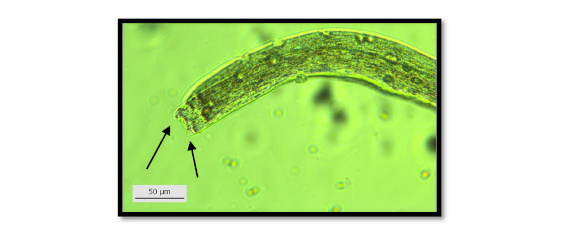
During this study, no cestode infections were detected in Sarpa salpa. However, nematode infections were observed in the digestive tract at a prevalence rate of 30%. These helminths belong to the phylum Nemathelminthes and the class Nematoda (Fig. 12-14). The nematodes were slender, with anterior lip-like structures, and were primarily found in their larval stages. They exhibited an irregular, coiled body wall and a simple oesophagus. Based on morphological characteristics, these worms were identified as belonging to the order Rhabditida25.
In this study, 140 bony fish specimens-70 Sarpa salpa (Shalaba) and 70 Euthynnus alletteratus (Razam)-were collected from the Qasr Ahmed local market for parasitological examination. The weights of Sarpa salpa ranged from 235-350 g, while Euthynnus alletteratus weighed between 840-1320 g.
Analysis revealed no correlation between fish weight and the presence of parasitic infection. However, a relationship was observed between weight and infection severity, with lighter fish exhibiting higher parasitic burdens. This trend may be attributed to environmental factors or stochastic chance, consistent with findings by Britton et al.15. Among the total fish examined in our study, 100 (71.4%) were found to be infected with Trematoda, Monogenea, and Acanthocephala, collected from the digestive tract and gills. Of these infected fish, 7 (70%) were Euthynnus alletteratus naturally infected with helminth parasites, while only 3 (30%) were Sarpa salpa.
Regarding parasite burden, a total of 1,308 helminths were isolated from the examined fish, with Euthynnus alletteratus harboring the majority (1,258 parasites, 96.2%) compared to Sarpa salpa (50 parasites, 3.8%). This higher prevalence in Euthynnus alletteratus aligns with findings from Italian coastal waters, where this species also showed elevated infection rates in both gills and digestive tracts16.
Parasitological examination revealed distinct helminth communities in two fish species. In Euthynnus alletteratus, Monogenea predominantly caused gill infections, accounting for 66.7% of the infections, while gastrointestinal tract infections were primarily due to Digenea, also at 66.7%. The presence of this Digenean aligns with findings from Taiwan regarding a related Euthynnus species26. The prevalence rate of Monogenea was similar to studies on the same host in the Mediterranean Basin, such as those conducted in Italy (55%26) and Tunisia27, suggesting that this parasite is endemic to the region. However, these rates were lower than those reported for E. alletteratus in Brazil28, which may be due to geographic variation. Notably, no cestode infections were found in E. alletteratus. However, Acanthocephala infections were present at a rate of 33.3%, a finding consistent with results from Indonesia for a related species (26.7%29).
In Sarpa salpa, a single Monogenean (order: Monopisthocotylea) was isolated from the gills. This genus has previously been recorded in Egypt in a fish species of the same family30. Digeneans were the most common parasites in S. salpa, constituting 70% of infections and found in the digestive tract. This prevalence is lower than the 93.8% reported in a study conducted in Algeria31, and the 10% reported by Gargouri Ben Abdallah et al.6, but similar to findings in Turkey32. These variations may be attributed to differences in study areas or sampling seasons.
No cestodes were found in S. salpa, but nematodes (order: Rhabditida) were present at a prevalence of 30%. This contrasts with a study in Turkey that reported no nematode larvae in S. salpa25. This discrepancy is likely due to differences in the aquatic environments between Libya and Turkey, as well as dietary factors since nematode larvae are often transmitted through the consumption of intermediate hosts33.
CONCLUSION
Fish parasites significantly contribute to economic losses in fisheries. This study highlighted a notable difference in the severity of helminth infections between two species: The carnivorous Euthynnus alletteratus (Razam) and the herbivorous Sarpa salpa (shalaba). The Razam fish, which feeds on crustaceans and small fish, exhibited a significantly higher intensity of parasitic helminth infections. This is likely because many parasitic worms have complex life cycles that rely on intermediate hosts, such as the prey consumed by carnivorous fish. Additionally, the high severity of infections is influenced by the morphological differences in the digestive tracts of teleosts and the specific ecological preferences of the parasites. In contrast, the herbivorous Shalaba fish showed a much lower severity of infection. This difference can be directly attributed to their distinct diets and trophic levels. Therefore, it is crucial to develop strategies to mitigate helminth parasite infections in fish, particularly in commercially valuable carnivorous species, to reduce the associated economic impacts.
SIGNIFICANCE STATEMENT
This study provides baseline evidence on helminth parasite diversity, prevalence, and tissue damage in two marine fish species with contrasting feeding habits in the Misurata Region. The findings highlight the role of diet in shaping infection patterns and parasite burden. These results contribute to understanding fish health, parasite transmission dynamics, and may support improved monitoring and management of marine fisheries resources.
REFERENCES
- Mustafa, R.A., S.A. Rather, R. Kousar, M.V. Ashraf, A.A. Shah, S. Ahmad and M.A.H. Khan, 2024. Comprehensive review on parasitic infections reported in the common fish found in UT of Jammu and Kashmir, India. J. Parasitic Dis., 48: 736-761.
- Saswati, M., D. Raut and L. Patnaik, 2013. Fisheries and hydrography of Baitarini at Jajpur, Odisha, East Coast of India. Int. J. Sci. Res. Publ., 3.
- Škugor, T., C. Hahn, J. Schlagbauer and S. Koblmüller, 2025. First insights into the ectoparasitic helminth fauna of freshwater fish on an Adriatic Island. J. Helminthol., 99.
- Bartoli, P., D.I. Gibson and R.A. Bray, 2005. Digenean species diversity in teleost fish from a nature reserve off Corsica, France (Western Mediterranean) and a comparison with other Mediterranean regions. J. Nat. Hist., 39: 47-70.
- Pérez-del Olmo, A., M. Fernández, D.I. Gibson, J.A. Raga and A. Kostadinova, 2007. Descriptions of some unusual digeneans from Boops boops L. (Sparidae) and a complete checklist of its metazoan parasites. Syst. Parasitol., 66: 137-157.
- Gargouri Ben Abdallah, L., R. Antar and F. Maamouri, 2011. Diversity of the digenean fauna in sparid fishes from the Lagoon of Bizerte in Tunisia. Acta Parasitol., 56: 34-39.
- Elmajdoub, L.O., K.A. Emshihee, F.M. Abushiba, S.E. Elzwawy, M.M. Abusahal and R.S. Aagme, 2023. Prevalence and morphological identification of digenean trematode species recovered from infected organs of lizardfish (Saurida undosquamis). Eur. J. Zool., 2: 1-6.
- FAO, 2022. The State of World Fisheries and Aquaculture 2022: Towards Blue Transformation. FAO, Rome, Italy, ISBN: 978-92-5-136364-5, Pages: 266.
- Offem, B.O., I. Bassey and G.U. Ikpi, 2011. Downstream changes on a tropical fish community structure by effluent from wood processing factory. J. Environ. Prot., 2: 982-995.
- Kahraman, A.E., T.Z. Alicli, T. Akayli and I.K. Oray, 2008. Reproductive biology of little tunny, Euthynnus alletteratus (Rafinesque, 1810), from the North-Eastern Mediterranean Sea. J. Appl. Ichthyol., 24: 551-554.
- Falautano, M., L. Castriota and F. Andaloro, 2006. First record of Etrumeus teres (clupeidae) in the central Mediterranean Sea. Cybium, 30: 287-288.
- Antar, R. and L. Gargouri, 2018. The diversity of teleost fish trematodes in the Bay of Bizerte, Tunisia (Western Mediterranean). Helminthologia, 55: 146-156.
- Mele, S., M.G. Pennino, M.C. Piras, D. Macias and M.J. Gómez-Vives et al., 2016. Ecology of the Atlantic black skipjack Euthynnus alletteratus (Osteichthyes: Scombridae) in the Western Mediterranean Sea inferred by parasitological analysis. Parasitology, 143: 1330-1339.
- Abdel-Gaber, R., F. Abdel-Ghaffar, H. Mehlhorn, S. Al Quraishy, K. Morsy and S. Maher, 2018. Light microscopic study of four plagiorchiid trematodes infecting marine fish in the South-Eastern Mediterranean Sea, Alexandria City, with descriptions of two new species. Parasitol. Res., 117: 1341-1356.
- Britton, J.R., J. Pegg and C.F. Williams, 2011. Pathological and ecological host consequences of infection by an introduced fish parasite. PLoS One, 6, No. 10.
- Elmajdoub, L.O., K.A. Emshiheet, F.M. Abushiba, S.E. Elzwawy, M.M. Abusahal and R.S. Alagme, 2023. Prevalence and morphological characterization of Hysterothylacium sp. (Nematoda: Raphidascarididae) recovered from infected organs of lizardfish (Saurida undosquamis). S. Asian J. Parasitol., 6: 94-102.
- Thaenkham, U., K. Chaisiri and A.H.E. Chan, 2022. Parasitic Helminth Sample Preparation for Taxonomic Study. In: Molecular Systematics of Parasitic Helminths, Thaenkham, U., K. Chaisiri and A.H.E. Chan (Eds.), Springer Nature, Singapore, ISBN: 978-981-19-1786-8, pp: 225-242.
- Prendini, L., 2011. Order Thelyphonida Latreille, 1804. In: Zhang, Z.-Q. (Ed.) animal biodiversity: An outline of higher-level classification and survey of taxonomic richness. Zootaxa, 3148: 155-155.
- Buchmann, K. and J. Bresciani, 2006. Monogenea (Phylum Platyhelminthes). In: Fish Diseases and Disorders. Volume 1: Protozoan and Metazoan Infections, Woo, P.T.K. (Ed.), CAB International, Nosworthy Way, Walling Ford, Oxford Shire, USA., pp: 297-344.
- Bursey, C.R., S.R. Goldberg and F. Kraus, 2007. New family, new genus, new species of acanthocephala (Echinorhynchida) from the lizard, Sphenomorphus granulatus (Sauria: Scincidae), from Papua New Guinea. Open Parasitol. J., 1: 7-10.
- Brabec, J., E.D. Salomaki, M. Kolísko, T. Scholz and R. Kuchta, 2023. The evolution of endoparasitism and complex life cycles in parasitic platyhelminths. Curr. Biol., 33: 4269-4275.e3.
- Yamaguti, S., 1963. Systema Helminthum: Monogenea and Aspidocotylea, Volume 4. Interscience, Hoboken, New Jersey, Pages: 669.
- Abidi, R., G.E. Khan and U.K. Chauhan, 2011. Monogenean infestations among freshwater ornamental fishes: An overview. J. Ecophysiology Occup. Health, 11: 199-203.
- Radujković, B.M. and D. Šundić, 2014. Parasitic flatworms (Platyhelminthes: Monogenea, Digenea, Cestoda) of fishes from the Adriatic Sea. Nat. Montenegrina, 13: 7-280.
- Ángeles-Hernández, J.C., F.R. Gómez-de Anda, N.E. Reyes-Rodríguez, V. Vega-Sánchez and P.B. García-Reyna et al., 2020. Genera and species of the Anisakidae family and their geographical distribution. Animals, 10.
- Shih, H.H., W. Liu and Z.Z. Qiu, 2004. Digenean fauna in marine fishes from Taiwanese waters with the description of a new species, Lecithochirium tetraorchis sp. nov. Zool. Stud., 43: 671-671-676.
- Derbel, H., M. Châari and L. Neifar, 2022. Checklist of the Monogenea (Platyhelminthes) parasitic in Tunisian aquatic vertebrates. Helminthologia, 59: 179-199.
- da Silva, C.G., B. Lopes, E.L. Gomes and G.B. da Silva, 2022. New geographic occurrence: Digenea Lobatozoum multisacculatum (Didymozoidae) on little tunny, Euthynnus alletteratus (Scombridae). Arquivos Ciências Mar, 55: 161-166.
- Yusni, E., A. Batubara and C. Frantika, 2022. Detection of endoparasites in mackerel tuna (Euthynnus affinis) in North Sumatra Province, Indonesia. Iraqi J. Vet. Sci., 36: 519-524.
- Mahmoud, N.E., A.M. Mahmoud and M.M. Fahmy, 2014. Parasitological and comparative pathological studies on monogenean infestation of cultured sea bream (Sparus aurata, Spariidae) in Egypt. J. Oceanogr. Mar. Res., 2.
- Boukadoum, A. and F. Tazerouti, 2024. Digenea community structure of the Salema, Sarpa salpa (Linnaeus, 1758) (Teleostei, Sparidae), from the Central Coast of Algeria. Helminthologia, 61: 59-75.
- Tepe, Y. and M.C. Oguz, 2013. Digenean parasites of Sarpa salpa (Linnaeus, 1758) from the Eastern Mediterranean Coasts of Turkey. Turkiye Parazitol. Derg, 37: 208-211.
- Pekmezci, G.Z., E.E. Onuk, C.S. Bolukbas, B. Yardimci, A.T. Gurler, M. Acici and S. Umur, 2014. Molecular identification of Anisakis species (Nematoda: Anisakidae) from marine fishes collected in Turkish waters. Vet. Parasitol., 201: 82-94.
How to Cite this paper?
APA-7 Style
Abushiba,
F.M., Emshiheet,
K.A., Elmajdoub,
L.O., Ali,
K.S., Elzwawy,
S.E., Abushalaha,
M.M., Alagme,
R.S., Hman,
H.A., Elgerani,
H.H., Ageela,
M.A., Eshtiwi,
F.F., Ben-Salah,
A.A., Dhana,
M.A. (2026). Detection and Morphological Assessment of Parasitic Helminths in Sarpa salpa and Euthynnus alletteratus from the Misurata Local Market. Asian Journal of Biological Sciences, 19(1), 51-62. https://doi.org/10.3923/ajbs.2026.51.62
ACS Style
Abushiba,
F.M.; Emshiheet,
K.A.; Elmajdoub,
L.O.; Ali,
K.S.; Elzwawy,
S.E.; Abushalaha,
M.M.; Alagme,
R.S.; Hman,
H.A.; Elgerani,
H.H.; Ageela,
M.A.; Eshtiwi,
F.F.; Ben-Salah,
A.A.; Dhana,
M.A. Detection and Morphological Assessment of Parasitic Helminths in Sarpa salpa and Euthynnus alletteratus from the Misurata Local Market. Asian J. Biol. Sci 2026, 19, 51-62. https://doi.org/10.3923/ajbs.2026.51.62
AMA Style
Abushiba
FM, Emshiheet
KA, Elmajdoub
LO, Ali
KS, Elzwawy
SE, Abushalaha
MM, Alagme
RS, Hman
HA, Elgerani
HH, Ageela
MA, Eshtiwi
FF, Ben-Salah
AA, Dhana
MA. Detection and Morphological Assessment of Parasitic Helminths in Sarpa salpa and Euthynnus alletteratus from the Misurata Local Market. Asian Journal of Biological Sciences. 2026; 19(1): 51-62. https://doi.org/10.3923/ajbs.2026.51.62
Chicago/Turabian Style
Abushiba, Fatma, M., Kholoud A. Emshiheet, Layla O. Elmajdoub, Khdija S.M. Ali, Sara E. Elzwawy, Mabrooka M. Abushalaha, Rowida S. Alagme, Huda A. Hman, Huda H. Elgerani, Marwa Ali Alsideeg Ageela, Fatima F. Eshtiwi, Awos A. Ben-Salah, and Mohammed A. Dhana.
2026. "Detection and Morphological Assessment of Parasitic Helminths in Sarpa salpa and Euthynnus alletteratus from the Misurata Local Market" Asian Journal of Biological Sciences 19, no. 1: 51-62. https://doi.org/10.3923/ajbs.2026.51.62

This work is licensed under a Creative Commons Attribution 4.0 International License.
